Project Overview
Visual Concensus is a data visualization project which looks at the 2000 US Census data. By plotting individual zip codes as colored circles on a map, users are engaged with the information before them and can easily spot patterns. The data focuses on population size, ethnicity, and houeshold income.
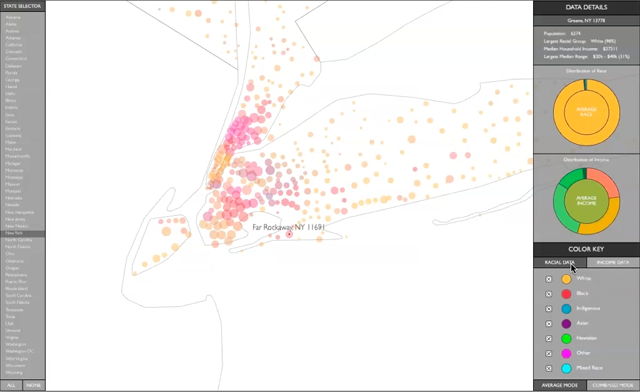
The project was coded in C++ and Cinder and is currently available as a stand-alone application for Mac OSX. Users can pan and zoom around on the map to investigate various areas, and can toggle numerous filters to focus on particular regions and demographics.
Video Demonstration
Project Download
This project is available for download at this link.
Concept Overview
As a collaborative effort with a colleague, Katherine Keane, an SMS-based phonebook service was conceived and launched within the ITP community. The service works with Textmarks, a free SMS redirection service that can link text messages with a special keyword to PHP scripts and other web-based pages.
Part 1 – Concept
The challenge in thinking up ideas for SMS based applications is that many applications would simply work better via the web or a mobile device. Why use text? Are there any ideas where being SMS based is a necessity or a strength, versus an inconvenience? Most of the SMS based apps out there that seem to work fall into one of two categories:
1. They app is intended to collect money, via your phone bill (like donating to the victims of the Haiti earthquake)
2. The app is intended for fledgling nations that use SMS rather than web-browsing
Kat and I sought out to create an app for the ITP community, and we didn’t want to take anyone’s money, nor did we want people to stop using web browsers when appropriate.
There has been a need in the ITP community for a centralized phonebook which lists students’ phone numbers. Recently a post to the email list invited people to add their name to a public google spreadsheet with this same intent. However, very few people elected to participate. One reason why is that the information on a spreadsheet is extremely accessible. Its just as easy to look up one number as it would be copy all the numbers. So some people are apprehensive about putting their name into such an open-book format.
Kat and I devised a plan to put this same info into an app that you can text to search for names. Because of the cost and time that it takes to lookup a single number, it is very unlikely that someone would take the time to extract all the numbers. Also, because the data is searched based, it would more difficult to find the names of people you don’t know and aren’t specifically looking for.
Part 2 – Technical Details
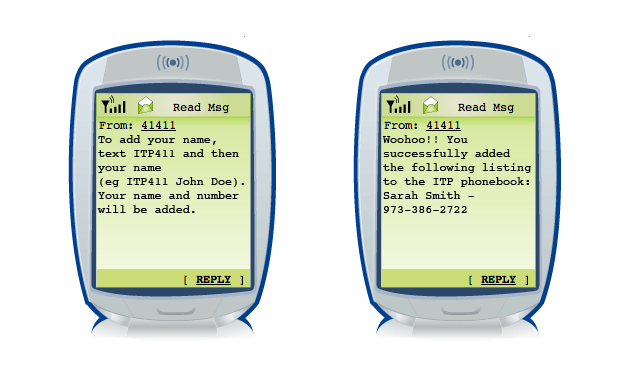
The basic technology behind our concept is that when you text a particular keyword (ITP411) to a particular phone number (41411), the message gets forwarded to a php script. This script processes your text and performs a small set of functions like looking up a name, adding a name, or editing a name. Special characters like @ and ! are used to activate these various modes.
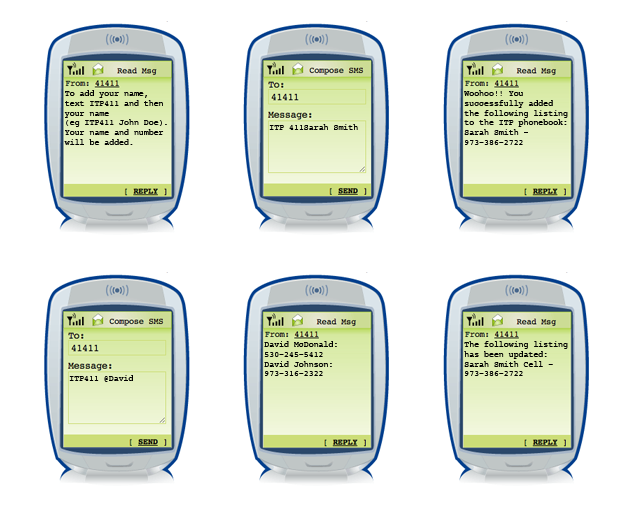
We have prototyped this concept and it has been released into the ITP community. Currently there is a 35% adoption rate among students.
Link to the live PHP script. Link to the source code as text.
Project Overview
As part of a series of tutorials on how to learn Cinder and it’s 2d drawing library, Cairo, an image processing application was developed.
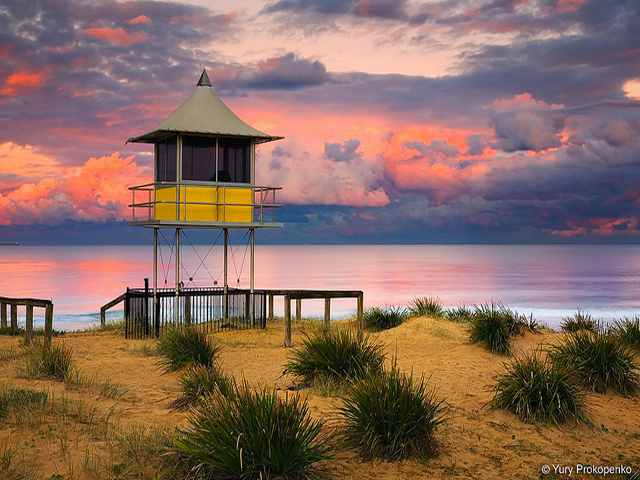
Starting with a hyper-real sunset photo by Yury Prokopenko, an algorithm was devised to scan an original image, process it’s pixels, and replace the image with a stylized illustration made up of colored discs.
Outputted Images
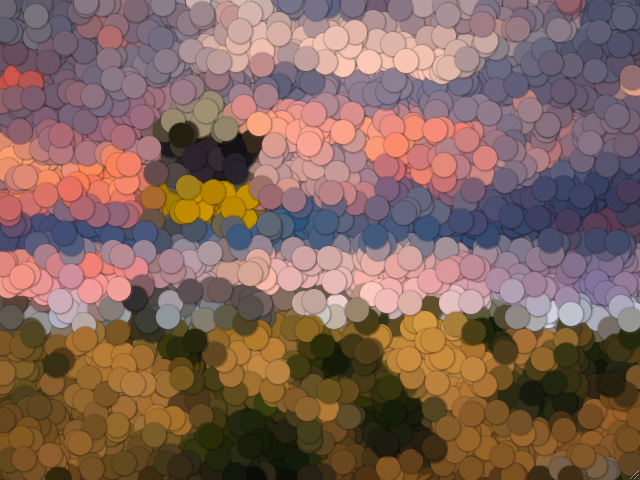
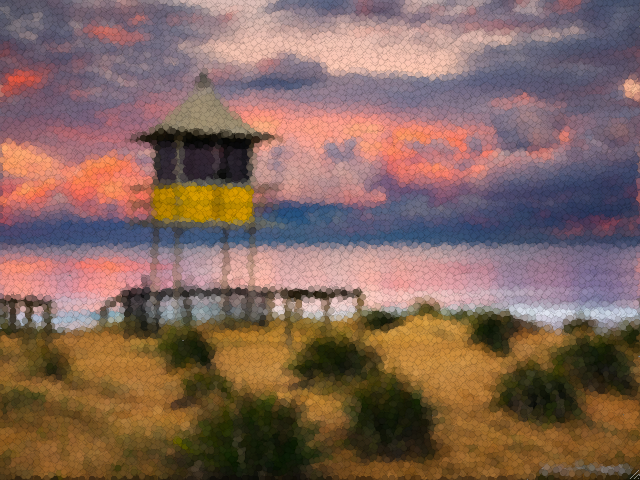
One variable in the application is the cell size of the pixel sample area and overlaid discs. Below are two processed final outputted images, one with a cell size of 24 and a second with a cell size of 6.
Project Overview
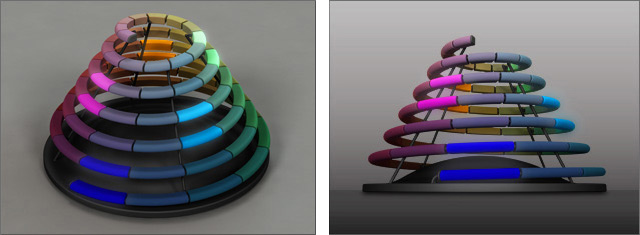
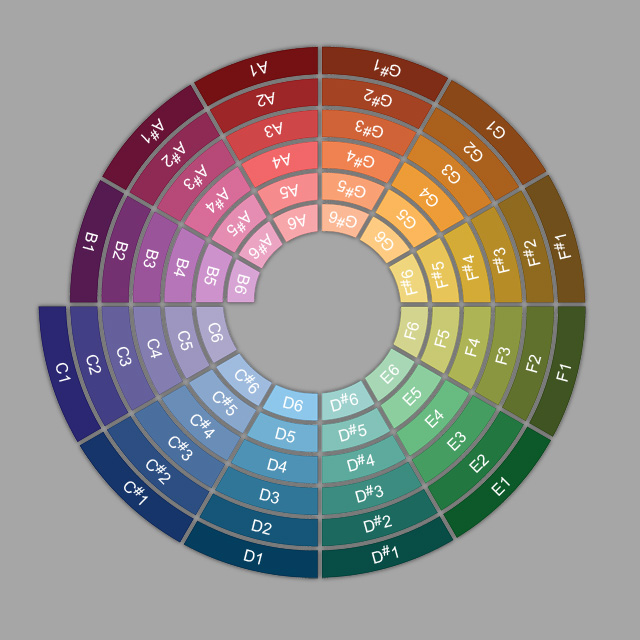
Building on the works of Wassily Kandinsky and Oskar Fischinger, this project explores visualizing sound as individual colored notes in an organized spiral form. The project began with the discovery of the spiral form, and was developed into a screen based interactive program and physically controlled interactive table-top device.
Part 1 – Discovery of the Spiral Form
While trying to find a way to optimally visualize the relationships between musical notes, the discovery was made of a spiral arrangement; not only did the spiral represent the tonal changes between adjacent notes, but it also revealed the relationship between the same note in different octaves.
Part 2 – Sound Spiral Animation
A hypothesis was made that harmonic music would create visual geometric patterns such as triangles and squares within the sound spiral. To explore this, Beethoven’s Moonlight Sonata was digitally encoded and accompanied by an animation in which each note was illuminated at the same moment it was heard.
Part 3 – Interactive Program
A live interactive version of the sound spiral was created using Processing.
Watch a video that demonstrates the program, or follow the link to the actual program.
Link to the LIVE INTERACTIVE PROGRAM.
Part 4 – Interactive Physical Prototype
A physical prototype of the sound spiral was built using the Arduino platform. An array of reed switches were used to activate each individual note, and a magnetic wand was implemented to trigger each switch. The signals were sent from the Arduino to the Processing program, allowing a user to play the sound spiral with their hands, rather than just the mouse.
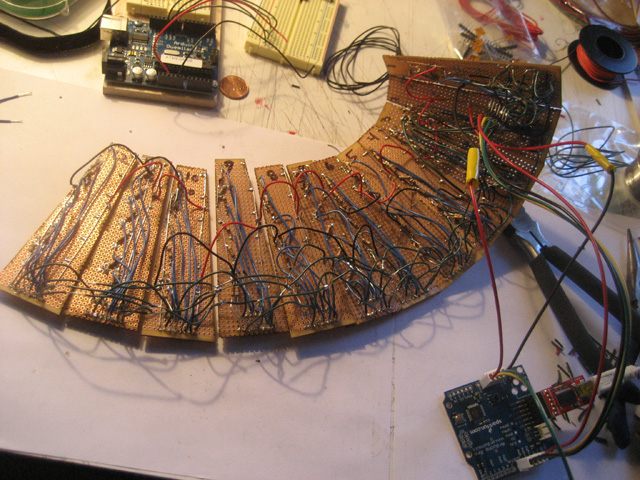
12 individual panels were custom made and hand soldered.
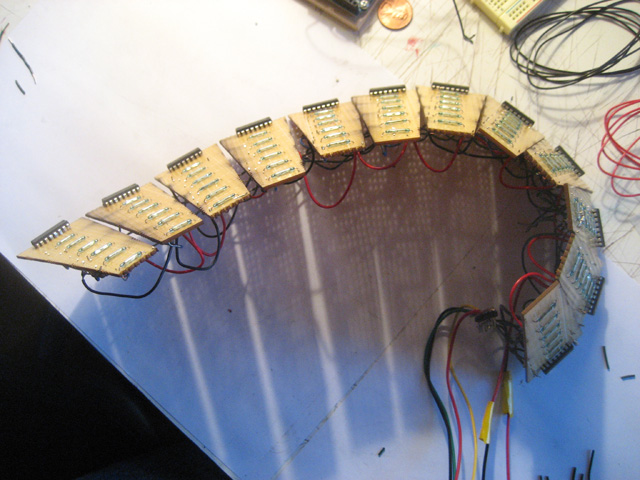
The panels were assembled together into the spiral form.
Video Demonstration of the device connected to a laptop running the Processing sketch.
Video Demonstration of chord mode and wand interface.
Project Summary
This study explored taking a live video stream and processing it to simulate three dimensions. The luminosity of each video pixel was analyzed and mapped to the depth of individual cells in an array of extruded rectilinear volumes. This technique of mapping luminosity to depth is identical to rendering physical textures in most 3d rendering engines.
Concept and code are original, using Processing and its built in video library. Note that only a standard web-cam was employed in this project and that the study took place more than one year before the Microsoft Kinect was released.
Project Summary
How often do prime numbers occur within a list of integers? Is there any pattern? Exploring these questions, a color system was developed to visualize the spaces in between prime numbers and turn this visual pattern into an engaging aesthetic artwork.
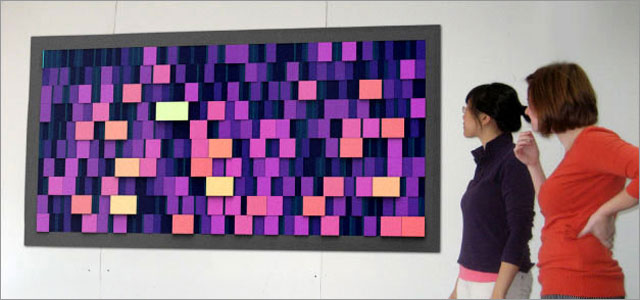
Several Pratt students study a 48" x 96" print of one prime number study.
Developing a Color System
Looking at a matrix of integers in which the prime numbers are highlighted, the gap in between any two primes forms a block of space. Each block is of a different interval, and this variety of intervals is precisely what was being visualized. To best show the different frequencies of primes, a color coding system was devised.
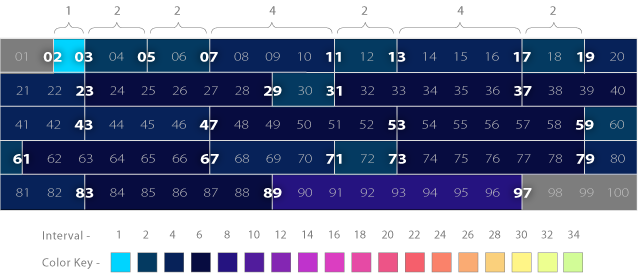
As the intervals get larger, the hue of the color transitions from blue to purple to red to green. Dark, muted colors are used for intervals that are most common, while bright, saturated colors are used for the least frequent intervals.
Frequency of Primes Visualization 1
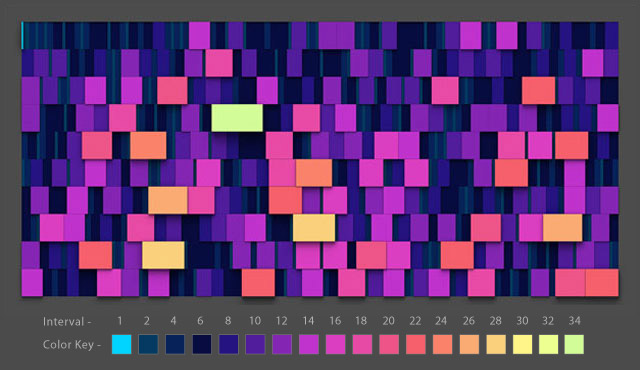
Visualization of the 550 primes within integers 1 - 4000.
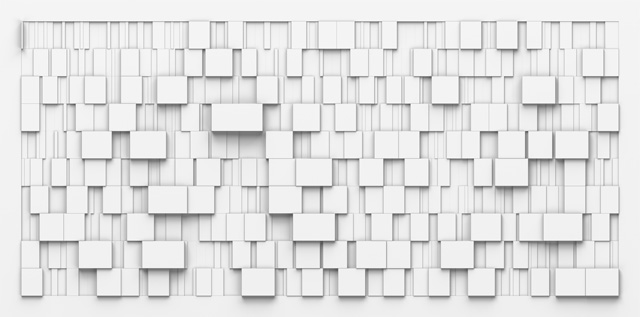
Visualization shown 3-dimensionally in white with shadows.
Project Summary
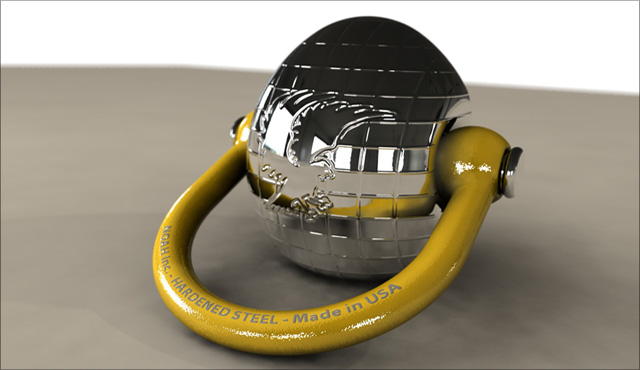
As part of the curriculum for a Solidworks 2 course at Pratt Institute, a metal egg form was modeled for a rendering demonstration. By adding decals and physical textures the object began to look real. Enabling depth of field and soft shadows also makes the final rendering near photo-realistic.
Project Summary
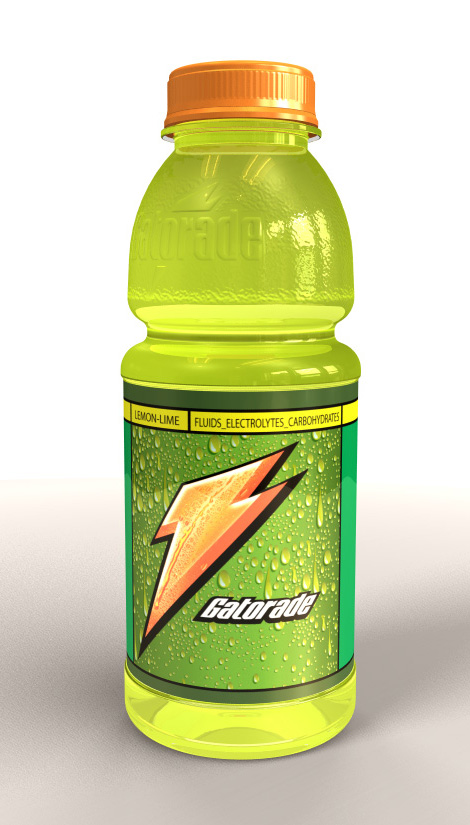
An entire family of innovative bottle concepts were modeled and visualized for Gatorade, a sub-brand of Pepsi-Co. The concept work is confidential and may not be shown, but as part of the project a test rendering was made with a standard Gatorade bottle. Modeling was done in Solidworks and rendering was done in Alias Studio Tools.
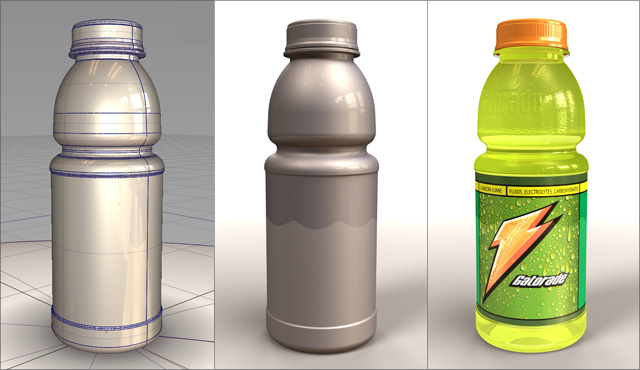
Photo-realism was achieved through the use of HDR environments, label graphics, and physical texture maps.
Project Summary
A 3d model was made in Solidworks based on an actual camera as an excercise in modeling and rendering. Custom textures were made using Illustrator and Photoshop and the final renderings were made in Alias Studio Tools. The entire project and all the final images were made entirely from scratch using digital tools.

Project Summary
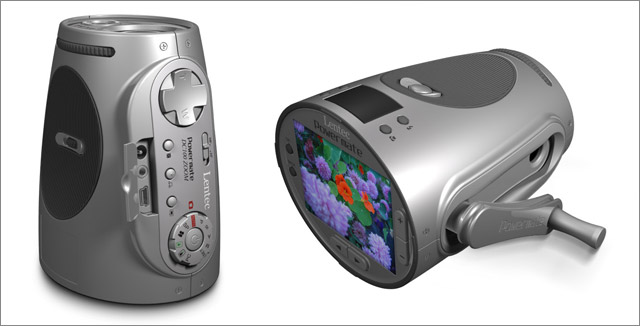
An innovative digital camera was designed with sustainability in mind. Its aluminum parts were optimized for recycling, and the camera’s built-in power generation system made it simple to recharge anywhere in the world. The barrel shaped body encourages one-handed shooting while fitting an integrated zoom lens.